Cacoo Shapes Library
Architect and introduce a scalable library component to expand platform functionality.
PROBLEM
The legacy editor presented a significant opportunity for growth, as it struggled to scale with an expanding asset library. To improve Cacoo's competitive edge, we identified the need for third-party enterprise shapes, which demanded a more streamlined user interface. By addressing issues such as intrusive panels that occupied valuable canvas space and the need for improved nested search navigation, we recognized the chance to redesign a more efficient system. Our goal was clear: to create a dedicated interface component that effectively categorized expansive shape sets, along with a high-performance, easily identifiable search library featuring visual iconography. This transformation enabled users to access resources seamlessly.
ROLE
Sole lead product designer
COLLABORATORS
Stakeholder
Dev team NYC
PROJECT MGMT
Responsibilities shared with stakeholder
BACKGROUND
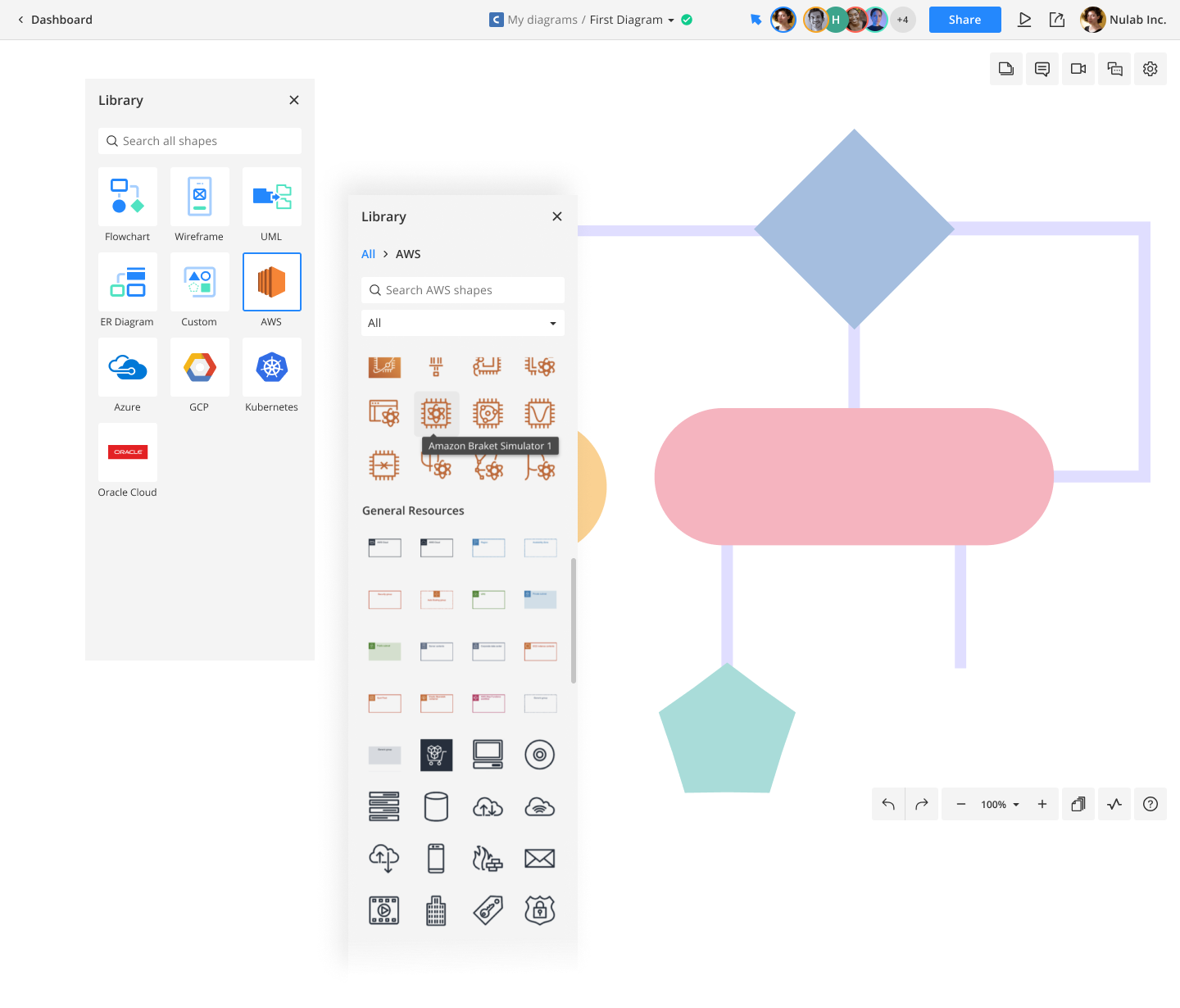
To maintain a competitive edge and meet modern market standards for collaborative diagramming tools, Cacoo initiated a fundamental transition from its legacy UI to a scalable, modular component architecture. The primary strategic catalyst for this overhaul was the integration of massive third-party cloud infrastructure and enterprise libraries, including standardized asset sets for AWS, Azure, Google Cloud Platform, Kubernetes, and Cisco. Hosting these expansive, frequently updated external libraries represented an entirely new capability for the platform, which had previously relied on a fixed, hardcoded asset ecosystem.
Before these modern enterprise sets could be successfully introduced, the existing shape library required extensive technical and visual debt clearance to strip away years of stagnant, underutilized shapes that cluttered the system. Because these newly integrated third-party libraries contained thousands of specialized, highly detailed components, forcing them into the old single-column layout would have completely broken the interface. The massive influx of new enterprise data necessitated a dedicated, decoupled space within the editor, establishing a clean architectural foundation that could scale dynamically to support a global user base of 4 million, protect critical enterprise subscription revenue, and allow engineering teams to seamlessly construct complex system topology without compromising canvas real estate or workflow efficiency.
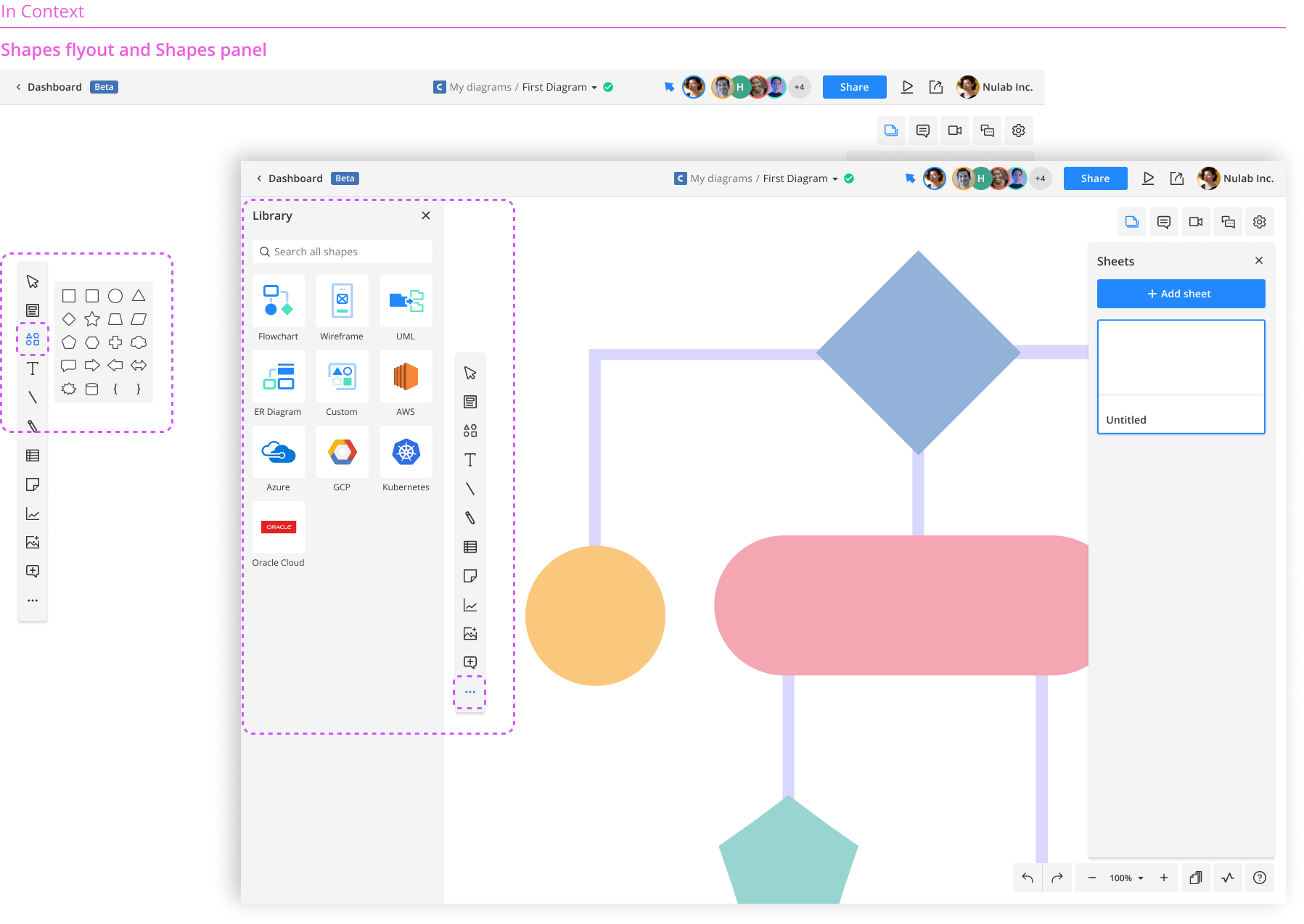
Integrating thousands of complex enterprise assets required a shift in design philosophy because we couldn't just build a larger menu; we had to architect a decoupled asset ecosystem that scaled dynamically without intruding on the user's workspace.
PROCESS
Analyzed product usage metrics and customer feedback regarding workspace occlusion and flat navigation to identify why critical cloud infrastructure assets (AWS, Azure, and Google Cloud) were underutilized and causing user churn.
Created a keyword-based search utility with indexed tagging for instant asset retrieval, establishing a scalable navigation system for thousands of specialized shapes.
Developed and tested various layout options, comparing fixed sidebars to floating panels, to keep the drawing canvas unobstructed and maintain daily active usage.
Decoupled the monolithic panel into a quick-access menu for foundational shapes and an expansive library for specialized sets to support future third-party integrations.
Introduced guided popovers to streamline the shape selection process and lower cognitive load during complex layout tasks.
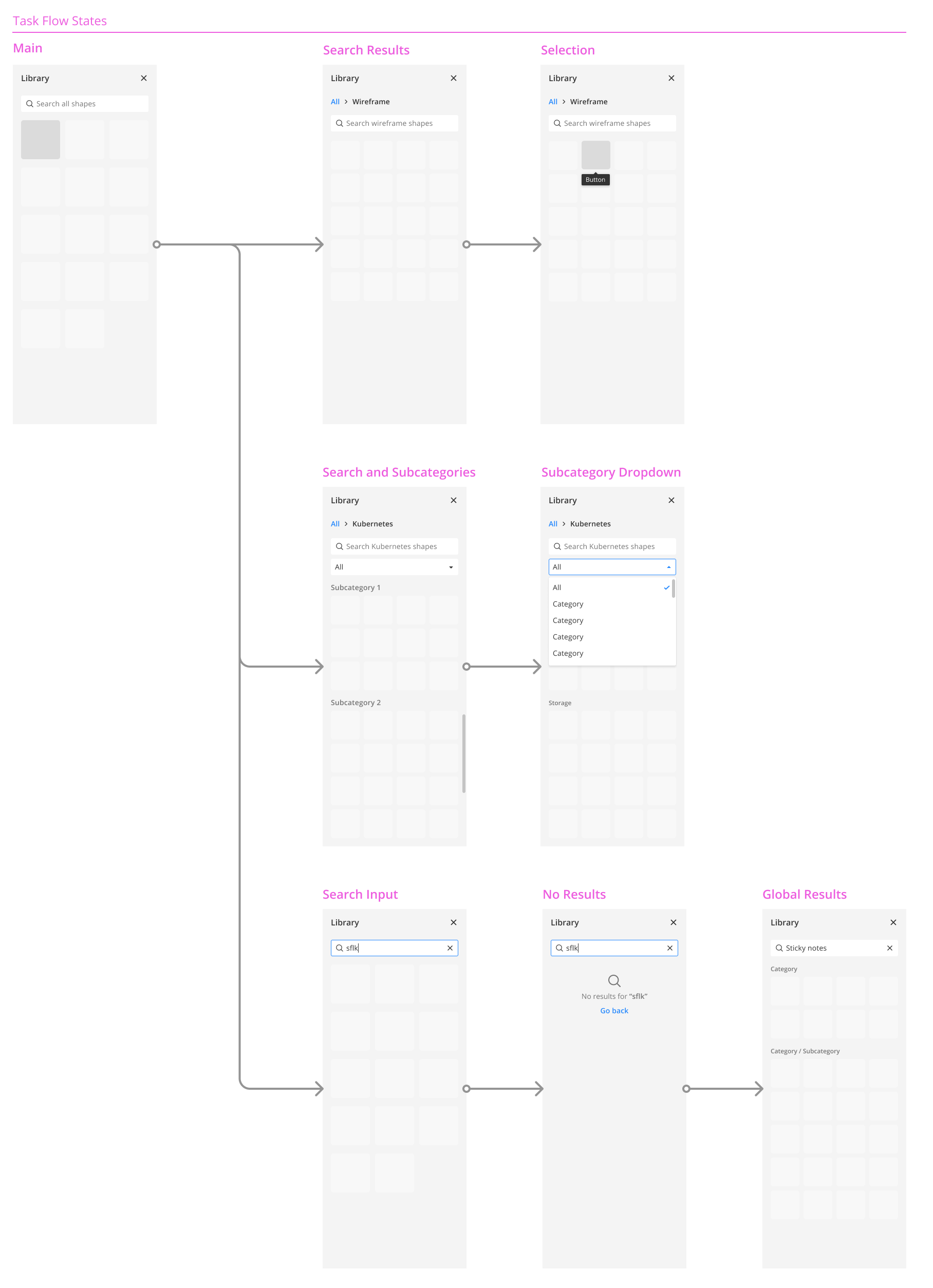
By treating the interface as a scalable ecosystem rather than a static menu, we successfully integrated thousands of modern enterprise assets while actually reducing the user's interaction friction and visual noise.
IMPACT
The transition to a modular, search-first shapes panel resulted in a 33% reduction in asset-creation time, directly validating the decision to overhaul high-friction user workflows. By replacing stagnant legacy shapes with a decoupled, scalable architecture, the editor successfully accommodated massive new third-party enterprise libraries, including AWS, Azure, and GCP sets, without compromising workspace efficiency.
This strategic modernization provided the essential framework needed to protect core enterprise subscription revenue, eliminate churn to competitors, and reliably support 4 million global users while reinforcing Cacoo's mission to deliver an efficient, cohesive collaboration platform.